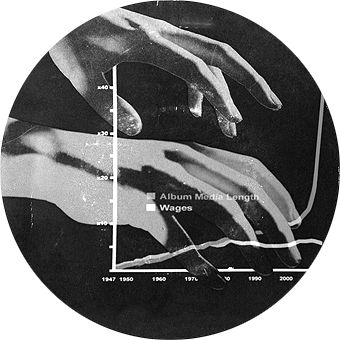
Soulnessless
A new computer music album by Terre Thaemlitz
Coming in late 2010 or early 2011
* Page under construction - updated as project parts reach completion.
Last updated: April 5, 2010 - "Traffic With the Devil" transcript and sound edit added.
Currently seeking a label for release. Inquiries welcome: info@comatonse.com
top |
synopsis |
format |
contents |
production schedule |
genres |
packaging |
pricing |
guinness book |
record labels
SYNOPSIS
In an era which insists upon judging audio in relation to "authenticity" and "soul," Terre Thaemlitz' latest computer music project, Soulnessless, includes multifarious critical analyses that dissect the intersections of gender, spirituality, and commercial audio production. With over 30 hours of new audio materials, over an hour of video, and a book's worth of writings spanning a 4.7GB UDF Data DVD and a video DVD, Soulnessless pushes the boundaries of the album format in today's post-CD era, where MP3 playback time is only limited by FAT 32 <4GB file requirements (a single composition can be up to 29 hours and 40 minutes at 320kB/s). It is without exaggeration an album of unprecedented scale, by which Thaemlitz calls into question marketplace demands for more and more "digital exclusive" materials as a form of labor exploitation that has been ever escalating since the CD replaced vinyl records (twice the playing time, yet producers receive the same or lower advances and royalties). Ironically, despite Soulnessless' completely digital format (MP3 audio/PDF text/DVD video), at over 8GB the amount of data involved makes it impractical for download. This is both an attempt to explore the unprecedented recording lengths offered by the MP3 format (a feature which goes largely unrecognized as a result of it's near exclusive use as a format for quick downloads), as well as an act of resistance to online distributorships (Thaemlitz' position on which was made material by his offline MP3 collection spanning two UFD DVD-R's Dead Stock Archive - Complete Collected Works, released on February 11, 2009).
Soulnessless is composed from an openly non-spiritual and anti-religious perspective that sees atheism not as a "solution" to religious organizing, but as an act of self-defense entwined with the hopelessnes of life amidst an unstoppable onslought of spiritual dogmas and superstitions. For Thaemlitz, the actions of non-believers such as herself are, as a precondition, relegated to invisibility and failure:
I concede the inescapability of religious and spiritual dogma to one degree or another in all corners of life - from extremist religious militarism to the seemingly harmless transcendental pretenses of "soul music," ambient, new age, classical, pop, rock, folk, house...
No matter how much I wish for the eradication of spiritual thinking, I have no faith in the possibility of an atheist society or godless world.
I am truly without faith.
In a media marketplace that demands soulness, I can only offer soulnessless. (from "Rosary Novena For Gender Transitioning")
It is from this ideological basis that Thaemlitz investigates a series of seemingly disjunctive events and contexts - from an intense meditation on the functions of labor within academic computer music, to the social messages underlying the unusual frequency of ghosts and hauntings experienced by undocumented Filipina/o workers in Japan, to the use of electronic audio devices by nuns in their convents, to the secret anti-war function of Catholic military prep schools in the U.S. The overall story is not linear, but constitutes a complex layering of simultaneous discourses, many subjects of which gain their power from secrecy and resisting Thaemlitz' attempts at documentation. Meditating upon a massive field of recorded media, one becomes aware of critical information remaining unheard/unseen/unwritten. Thaemlitz is not interested in romanticizing or celebrating such invisibilities, nor seeking forms of empowerment; but simply seeks to identify forms of violence as they are mutually averted by and born of silence.
Stylistically, Soulnessless is often conventionally meditative and soulful - some may even say spiritual (cringe). This is, of course, an extension of Thaemlitz' ongoing critique of the socio-material processes that condition the production and reception of audio genres. This critique has informed all of his albums in the unfortunately spiritual-laden genres of Ambient and Deep House (the appeal of which, for Thaemlitz, lies in histories of socialist-inspired Constructivism from the 1910's, and the sound of discotheques frequented by members of direct-action movements from the 1980's which spawned many of today's critiques of identity politics). Drawing from her own experiences as a non-spiritual consumer culturally forced to internalize and identify with dominant spiritual-laden media, Thaemlitz seeks to show how non-believers build affinities for sounds with self-defeating associations. As a result, a producer's arrival at a particular sound is not reflective of the "musician's heart" nor any other claims of authenticity, since the producer's "heart" (or intent) may in fact be betrayed by dominant associations with the sounds at hand. While most listeners and critics would be quick to label such producers as "phoney" or possibly even "culturally exploitative," Thaemlitz asserts the real act of exploitation is the one enacted by dominant culture against the social and subjective interests of those of us who are forced to "fake it" through life. In this sense, Soulnessless, along with Thaemlitz' existing catalog, is testimony to the fact that a producer coming from an anti-spiritual, socio-materialist perspective can culturally arrive at the same sound others are apt to call "soulful," and by extension many of his listeners must also secretly use those sounds for completely different ends than those commonly prescribed. Soulnessless investigates the cultural and interpersonal implications of these processes within the commercial audio marketplace, and presents them as symptomatic of problems of identification and alienation affecting all consumer relations under contemporary capitalism.
Over four years in production, Soulnessless promises to be more than a long anticipated follow-up to Thaemlitz' final electroacoustic album for Mille Plateaux, Lovebomb/愛の爆弾, which was quietly released without fanfare (or payment) at the verge of their bankruptcy in 2003. It shall present a real, material response to the dilemmas of contemporary digital audio production, all the while leading listeners through a multi-media series of twists and turns that takes a minimum of days to consume, and weeks to digest.
top |
synopsis |
format |
contents |
production schedule |
genres |
packaging |
pricing |
guinness book |
record labels
FORMAT
Two (2) disc set:
- Disc 1: 4.7GB UDF Data DVD containing 320kB/s MP3 audio & PDF texts.
- Disc 2: NTSC video DVD.
top |
synopsis |
format |
contents |
production schedule |
genres |
packaging |
pricing |
guinness book |
record labels
CONTENTS
DISC 1 (4.7GB UDF Data DVD)
DISC 2 (NTSC Video DVD)
- Rosary Novena For Gender Transitioning
Video Duration: 00:20'46 (h:m's)
Status: English version complete. Japanese subtitle translation in process.
Summary: Drawomg parallels between spiritual deprogramming and gender deprogramming, only to have sexual reassignment surgery (SRS) threaten to result in a new cult of essentialist gender identity.
- Traffic With the Devil
Video Duration: --:24'02 (h:m's)
Status: English version complete.
Summary: As the stress of living illegally compounds, Filipina(o) overstays in Japan experience an increase in apartment hauntings and terrifying apparitions. Do the ghostly visitations provide psychological release, or additional trauma? While recording interviews in the Philippines, unexpected circumstances introduce a new series of social and anthropological power dynamics that complicate the project beyond resolution. A continuation of "Anthropological Interventionism" from the album Lovebomb/愛の爆弾
- Pink Sisters
Video Duration: --:--'-- (h:m's)
Status: Editing.
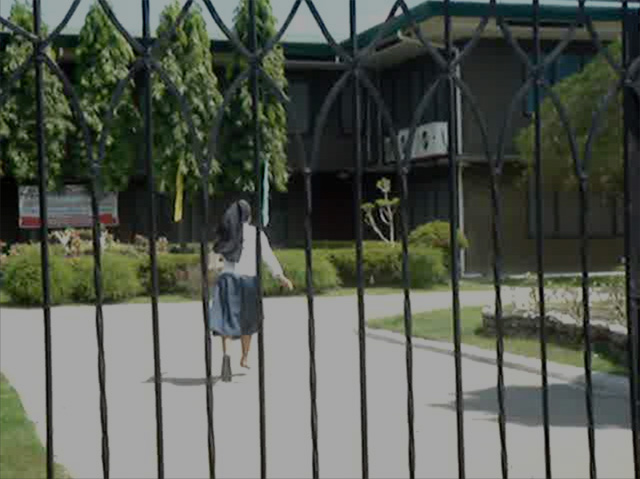
Summary: An attempt to document non-commercial (yet non-liberating) contexts where issues of gender, spirituallity and electronic audio devices collide leads to Roman Catholic convents in the Southern Philippines. A continuation of "Anthropological Interventionism" from the album Lovebomb/愛の爆弾
- Two Letters
Video Duration: --:--'-- (h:m's)
Status: Editing.
Summary: World War I saw the R.O.T.C. militarization of Roman Catholic schools in the U.S., as Catholic Italian- and German-Americans attempted to prove they were not "the enemy." While these religious schools continue to churn out soldiers, they also secretly promoted refuge against draft military enlistment to those who joined the clergy. This is the story of my father's experience within these institutions, as student, clergy and teacher... but this story cloaks another story that needs to be told yet likely never will.
Total Running Time (completed to date): 00:44'48 (h:m's) | est. 01:20'00
top |
synopsis |
format |
contents |
production schedule |
genres |
packaging |
pricing |
guinness book |
record labels
PRODUCTION SCHEDULE
English video and texts to be finished by the end of September, 2010 (est.).
top |
synopsis |
format |
contents |
production schedule |
genres |
packaging |
pricing |
guinness book |
record labels
GENRES
AUDIO: Ambient, computer music, electroacoustic, experimental, fagjazz, meditative, modern composition, new music.
VIDEO: Anthropological interventionism, collage, documentary, narrative, science fiction, subtitles/textual.
TEXT: Academic, anti-religious, atheist, autobiographical, Feminist, fiction, Gender studies, Marxist, non-fiction, post-Humanist, post-Identitarian, post-Modern, Queer studies, Transgendered studies.
top |
synopsis |
format |
contents |
production schedule |
genres |
packaging |
pricing |
guinness book |
record labels
PACKAGING
Soulnessless is to be packaged and sold as an audio cd, although it may also be cross-marketed as a video DVD. The two discs are to be packaged in a double disc mini-album CD sleeve which resembles a vinyl double-album gatefold jacket, similar to that used for the 2CD release of The Laurence Rassel Show. It is also hoped to include a poster or other graphic content. Unlike Thaemlitz' previous albums, the lengthy text will not require paper printing, as it will be included in PDF format on the UDF Data DVD.
top |
synopsis |
format |
contents |
production schedule |
genres |
packaging |
pricing |
guinness book |
record labels
PRICING
Soulnessless is to be priced as a normal album or double-album.
top |
synopsis |
format |
contents |
production schedule |
genres |
packaging |
pricing |
guinness book |
record labels
GUINNESS BOOK APPLICATION
Applications to the Guinness Book of World Records will be submitted for consideration as "Longest playing non-compilation album consisting of all new materials by a single artist," "Longest single-file commercially released composition," etc.
top |
synopsis |
format |
contents |
production schedule |
genres |
packaging |
pricing |
guinness book |
record labels
RECORD LABELS
Currently seeking a label for release. Inquiries welcome: info@comatonse.com
top |
synopsis |
format |
contents |
production schedule |
genres |
packaging |
pricing |
guinness book |
record labels

|
Meditation on Wage Labor and the Death of the Album
Listen to excerpt. 00:01'31 1.4MB 128kB/s MP3
AUDIO FILE INFO
Name: output.mp3
Format: MP3 (44100kHz / 320kB/s fixed bit rate)
Size: 3.984217739664 GB
4,079.8389654159 MB
4,177,755.1005859 KB
4,278,021,223 bytes
34,224,169,784 bits
Duration: 29:42'30.530575 (h:m's.ms)
106,950.530575 seconds
Note: Possible variance of -0.1024 sec./-4096 bytes allocated to Mac Ext file system.
SUMMARY
"Our reckless extension of goodwill [via pro bono projects and performances] is ultimately an act of self-sabotage. The impassioned artist's stance, "art for art's sake," obfuscates a labor issue. The iconic struggling artist who volunteers her work is a scab, but does not know it. If demanding payment for our labor means culture industries would collapse, then so be it. Perhaps we would finally begin conceiving of cultural production in terms larger than industry. Or more likely, we might find that we cannot exist without those industries which fail to support us, making us already pathetically irrelevant. Either way, I shan't be mourning."
- Terre Thaemlitz
1930: Introduction of the 36 minute 33RPM Long Play (LP) album
1980: Introduction of the 74 minute compact disc (CD), followed by the 80 minute/700MB CD, and now the 90 minute/800MB CD
1991: Introduction of the MP3 file format (file duration determined by media size [CD, MD, etc.] or computer OS file size restrictions)
In the era of MP3 downloads, the link between performance duration and media format duration has been severed. The album, as a compositional formation derived from those media durations, is dead in the wake of infinite single-track downloads. While there is a desire to celebrate audio recording's liberation from the arbitrary time restrictions of archaic media formats, technological and corporately devised limitations of the MP3 format make any such celebration premature. Throughout the CD era, record labels have come to demand audio producers make projects that fill the longer digital media capacities such that consumers now feel disappointment and even trickery when purchasing shorter albums, yet all the while labels are paying lower advances and royalties. Today, online distribution demands "digital exclusive" materials that exceed the CD, while royalties are recouped in ever-smaller fractions as projects are financially (and aesthetically) fragmented through single-track downloads. In the midst of current economic crises among distributors and record labels, aesthetic conservatism is on such a rise that it seems impossible to consider the MP3 as a medium suited for anything other than short compositions intended for fast download, when in fact it offers never before capable LP possibilities. Internet liberationist hype and entrepreneurial promise constitute the ideological means for concealing how current trends in MP3 audio make audio composition all the more enslaved to the format whims of a disheveled, corrupt marketplace fixated on mass appeal and convenience in all genres. Between June 6-16, 2008, I set out to record the "world's first full-length MP3 album" (<4GB, FAT32 compliant, approx. 30 hours at 320kB/s) at York University's Sir Jack Lyons Music Research Centre, in England. The resulting MP3 file is an edit of a 31+ hour piano solo recorded in sittings averaging 4 to 6 hours in length. The theme is "Meditation on Wage Labor and the Death of the Album."
|
賃労働とアルバムの死についての熟孝
見本を聴く 00:01'31 1.4MB 128kB/s MP3
音源ファイル情報
ファイル名: output.mp3
形式: MP3 (44100kHz / 320kB/s 固定ビットレート)
サイズ: 3.984217739664 GB
4,079.8389654159 MB
4,177,755.1005859 KB
4,278,021,223 バイト
34,224,169,784 ビット
収録時間: 29時 42分 30秒 530575ミリ秒
106,950.530575秒
メモ: Mac Extファイルシステムに割り当てられた-0.1024秒/-4096バイトの誤差あり。
概要
「我々の[無料でやる企画や講演を通して]行う思慮のない善意の拡大は結局おのれに対する妨害活動に他ならない。「芸術の為の芸術」という情熱的な芸術家の態度は、それが労働という点を不明瞭なものとする。無報酬で作品を提供する貧しい芸術家はその象徴で、その行為はスト破りと同意であるが、自身はそのことに気づいてはいない。我々が労働の対価を求めることが文化産業を崩壊させると言うのなら、そうなってしまえばよい。そうなれば、おそらく我々は最後には社会における文化の創造が産業をしのぐものと考え始めるのかもしれない。あるいはもっと、すでに我々を悲劇的に不適切なものとしている、我々を支えることに失敗した産業なしには存在しえないという事を見出すのかもしれない。いずれにしても私は嘆き悲しむべきではない。」テーリ・テムリッツ
1930年、36分の33RPMのLPアルバム登場
1980年、74分のオーディオCD登場(続いて80分が登場、現在は90分が可能)
1991年、MP3ファイル・フォーマット登場(ファイルの長さはメディア [CD, MD等] およびファイルシステム [MacOS, Windows等] によって決まる)
MP3ダウンロードの時代が到来し、パフォーマンス時間とメディアフォーマットの時間の間にあった関係性が断たれてしまった。メディアの長さによってその作品の長さが規定されていたアルバムという形態が、際限のないシングルトラック毎のダンロードの台頭によって死んでしまった。オーディオ録音の初期のメディアフォーマットによる恣意的な時間の制約からの解放を喜びたいという思いの一方で、MP3フォーマットの技術的、または商業目的での制約が、それはあまりにも時期尚早だと考えさせずにおかない。CDの時代、契約金と印税をどんどん低くしていきながら、レコードレーベルはオーディオプロデューサー達にどんどん長くなるデジタルメディアの容量を満たすようにプロジェクト作成を要求するようになった。それはたとえば今日消費者が時間的に短いアルバムを買えば、落胆させられたり、詐欺にあったとさえ感じさせてしまうようなこととなった。今日、オンライ配信業者は「ダウンロード配信専用」の作品を要求し、それはCDの容量よりながい。一方で印税は1曲ごとバラバラに支払われ、プロジェクトは財政的に(芸術的にも)シングルトラックダウンロードを通して粉々にされてしまった。最近のレコードレーベルやディストリビューターが財政難に陥っている間、芸術的保守主義はMP3は短時間でダウンロードを目的とした短い楽曲に適したメディアであるとしか考えられなくなった。実際はMP3には今まで出来なかった長さの作品を収録する事もできるのに。インターネット解放運動家の誇大広告とビジネスチャンスという嘘は、MP3音源の最近の傾向が、音楽作成をすべてのジャンルにおいて大衆へのアピールと手軽さに集中しているめちゃくちゃで腐敗した市場の我侭によって望まれている媒体に隷属させているという事を隠すためのイデオロギー的手段を打ち立ててしまった。2008年6月6日から16日の間、私は「世界初MP3フルレングスアルバム」(4ギガバイト弱、FAT32互換機、320kB/s、収録時間約30時間)をイギリスのヨーク大学のジャックライオンズミュージックリサーチセンターにて録音した。作品は、平均4から6時間連続して録音したピアノソロをつなげてできた31時間超の音源を編集して出来上がった。テーマは「賃労働とアルバムの死についての熟考」。
|
top |
synopsis |
format |
contents |
production schedule |
genres |
packaging |
pricing |
guinness book |
record labels

|
Rosary Novena for Gender Transitioning
Listen to excerpt. 00:01'33 1.4MB 128kB/s MP3
SUMMARY
Drawing parallels between spiritual deprogramming and gender deprogramming, only to have sexual reassignment surgery (SRS) threaten to result in a new cult of essentialist gender identity.
VIDEO TRANSCRIPT:
Part I
ROSARY NOVENA FOR GENDER TRANSITIONING
From 1997-2000, I lived in Oakland, California.
Although I did not own a radio receiver, the wires in my studio acted as an antenna, filling the line noise with religious broadcasts from a local public-access radio station.
Some might call them messages from God.
I called them fucking annoying.
I hate religion.
I hate all religions.
Without exception.
Yours too.
I hate spirituality.
I hate all spiritual ways of life.
I hate all spiritual thinking.
That includes secular spiritualism, agnosticism, superstition, astrology, fortune telling, blood type character readings, homeopathy, crystal power, angels, people who rationalize their belief in the inane with the phrase "nobody really knows what happens after they die," and people who believe Buddhists never started a war.
I have never encountered a form of spirituality that did not involve the reification of individual and communal ignorance.
Spirituality placates our incomprehension of the material with tales of forces possessing the knowledge we consider missing in ourselves, often personified as omnipotent beings.
I pity the gods, born of shame over our collective stupidity, their powers enslaved to answering whatever inane questions we throw at the universe.
Faith in the gods is inseparable from our fear of confusion, our simultaneous fear of noise and silence, our juvenile demand for order where there is none.
Yet in all the gods' supposed greatness, no "God's Plan" has ever delivered more than a given culture's status quo, with all of its miseries and inequities.
I understand faith's appeal as a means of empowering oneself, particularly among those hoping to escape poverty and violence.
I understand that many religious groups provide vital social services, many of which are not provided by local governments.
I understand how inadequate social services can create disdain for political process, and give appeal to notions of social order that transcend our material failures.
But the quest for 'supra-social' solutions to 'social' problems obfuscates the material processes through which faith-based institutions are formed and operate, seriously complicating - if not thoroughly compromising - processes of social and institutional reform.
Faith-based organizing antithetically seeks to alter the material while ideologically negating it via the supernatural... which is why so many religions anticipate salvation through the gods' apocalyptic destruction of the material world.
In its anti-materiality, faith-based organizing is inherently anti-social.
And positing faith as "a solution for today's world" overlooks centuries of hellish religious domination prior to the relatively new phenomenon of the (never really very) secular state.
Religion is not an alternative.
It is precedent.
It is tradition.
It is our collective shit piled miles deep over aeons.
I do not say these things as an "intellectual" dismissing "believers."
To the contrary, I speak as someone raised as a Roman Catholic by parents with deep religious roots, my father having been a celibate Brother for 19 years prior to marrying my mother, who kept company with the nun teachers of her youth until their deaths.
I was born in an area dominated by Catholic and Jewish faiths.
We then moved to a town dominated by anti-Catholic Evangelical Christians, it being the global headquarters of the Assembly of God church.
The antagonisms between the faiths I was exposed to, as well as the hatred nestled in their teachings of "God's love" (homophobia, sexism, racism, etc.), led me to disbelief by age 13.
At age 14, I avoided the sacrament of Catholic Confirmation by telling my parents I needed more time to develop a worthy faith,
which was a lie since I knew I never wanted to be confirmed, but my parents would not respect my judgment in the matter.
At age 16, my father announced he "would not be tricked again" and I was confirmed unwillingly after being forced through weeks of nonsensical training.
In a last minute act of resistance I attended the ceremony wearing a florescent green sweater and a spiky modified-mohawk, which managed to stop the arch bishop from physically laying his hands on my head during the confirmational blessing.
I would like to think his confused, hovering hands having never touched my body means I technically remain unconfirmed.
Beyond struggles with Judeo-Christian communities, as a young adult in New York I helped deprogram loved ones who were members of religious cults including Mahikari and others.
And since moving to Japan, one of the world's least religious societies, I still find myself helping loved ones overcome their fear of ghosts.
So when I speak against religion and spirituality, I do so not as a person with the rare luxury of a secular upbringing, but as a person who has struggled to overcome one's own spiritual programming, and who sees others struggling to do the same.
I assure you, any harshness to my words rests in defensive panic, not arbitrary aggression.
I do not stand proudly before you.
I am laying prostrate, an anti-Holy Roller speaking in tongues, trying to catch my breath for one more kick and "Fuck you!" against the endless trample of faiths and superstitions framing my existence in this world from birth to death.
I concede the inescapability of religious and spiritual dogma to one degree or another in all corners of life - from extremist religious militarism to the seemingly harmless transcendental pretenses of "soul music," ambient, new age, classical, pop, rock, folk, house...
No matter how much I wish for the eradication of spiritual thinking, I have no faith in the possibility of an atheist society or godless world.
I am truly without faith.
In a media marketplace that demands soulness, I can only offer soulnessless.
Because verbalizing disbelief places one in danger of losing family, friends, employment, and social networks, perhaps I should assume that apologist stance familiar to all nonbelievers.
A limited inquiry into the influences of Catholicism in my own life would be a safer topic to discuss here, since anything less subjective could be labeled culturally insensitive, bad karma, anti-Semitic, demanding fatwah, or any number of other curses bestowed upon outsiders.
I wish to limit the potential for such curses because I have already endured acts of verbal and physical violence at the hands of Christians, and suspect that fanatical followers of the other great religions of the world are no less capable of the same.
So I begin the traumatic task of recalling my upbringing under Catholicism, not as a faith I rejected, but as an educational system that laid my very foundations.
As someone who believes the effects of childhood conditioning continue influencing us into old age, I may assume my current anti-religious values have been guided by metaphors and symbols burned into my mind through a youth of tantric repetition, ceremony and indoctrination.
I scan shadowy, long repressed memories for signs of how my spiritual upbringing educated me into its own rejection.
I seek omens of transgenderism and queerness.
From the discomfort of self reflection the Virgin Mother comes, patrona of my apologist analysis.
For centuries, cults of the Virgin Mother have served as matriarchal counterpoints to patriarchy in Catholic cultures.
I recall my own grandmothers - both single Catholic mothers in an era when Catholic mothers simply were not single - calling upon Mary for strength.
But I am not interested in espousing Mary's "feminist potential," which strikes me as severely limited and conditional.
There is something else about her... a different gender issue at play passed down for generations in Holy Mystery, guiding me here and now to out the Holy Queen as transgendered.
Her first appearance on my "GENDAR" (the transgendered equivalent of "GAYDAR") came in the form of a 14cm wooden phallus sitting on my mother's shelf.
It was a gift from her lifelong mentor and friend Sister L. from the progressive Wisconsin-based Sisters of St. Joseph of the Third Order of St. Francis.
Sister L. had educated and cared for my mother since elementary school, and was still around with soft kisses during my childhood.
(May they both forgive me for annunciating what they left unspoken.)
For this rather nicely sized phallus undergoes a metamorphosis, opening with labia-like doors to disclose an elongated statuette of the Virgin Mother, phallic in a Giocomettian sense, her head appearing from a clitoral hood, with a vaginal slit running down the front of her gown.
While Westerners might easily recognize and discuss such sexual overtones in, say, a statue from Africa, a good Catholic remains willingly blind to that which she worships - replicating but never speaking the meaning of symbols passed down over hundreds of years.
The vaginal gothic arch, the church as womb, the eucharist as pseudo-sexual cannibalism ("Just what part of his body did I eat?")... all to be meditated upon silently, yet deemed blasphemous to speak aloud by the gnostic-descendant, celibate church leaders who spread the myth of the virgin birth after a power coup around 400 AD.
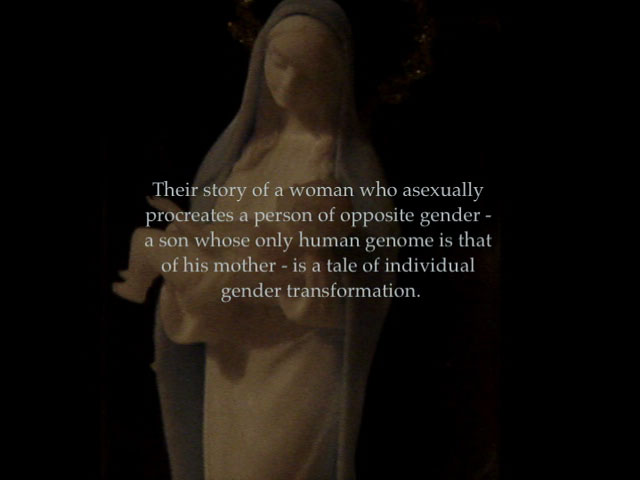
Their story of a woman who asexually procreates a person of opposite gender - a son whose only human genome is that of his mother - is a tale of individual gender transformation.
Much as the Holy Trinity is three in one, Mary and Jesus are two in one.
They are not "of the same human body" in the sense that you and I are of the same bodies as our mothers and fathers.
On a biological level they are the same body.
The Madonna holding the infant Jesus - the best images of which are always melancholic - becomes a "before and after" picture of Female-to-Male transitioning: a feminine figure having given birth to her own masculine form.
Conversely, the Pieta is a scene of Male-to-Female transitioning, with the female Mary gazing down upon her abandoned male carcass.
Once these spells are spoken, they become undeniable.
But the ultimate proof of these absurdities comes from my maternal grandmother, whose name was none other than... Maria.
Holy Mary, mother of Geri, grandmother of Terre...
In 1985, at age 16, I spent the summer living with her.
It was the summer when I first began cross-dressing in public.
A former seamstress, Grandma Mary helped me piece together odd outfits by modifying old slips and skirts taken from her attic.
It was an unusual summer - the peak of our closeness in an often not so close relationship - which we laughed about years later on her deathbed.
One day as autumn neared, she brought a box down from her attic and handed it to me.
"Don't ever show this to your mother. Don't even breathe a word... Just take it out of my house."
Mary forgive me, I have never spoken to anyone about this until now... I pray 25 years of secrecy is enough.
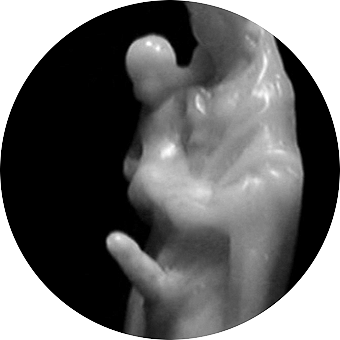
Inside, wrapped in cross-stitched portraits of Our Lady, was a wax figurine of the Madonna and child with a highly unusual feature...
[IMAGE OF FIGURINE - MADONNA HAS PHALLUS]
NOVENA PRAYER (FOR NINE DAYS)
Hail, O Lady of Gender Transitioning, Holy Queen, Mother of Mercy, my hope!
To Thee do I send up my sighs, mourning and weeping in this valley of tears.
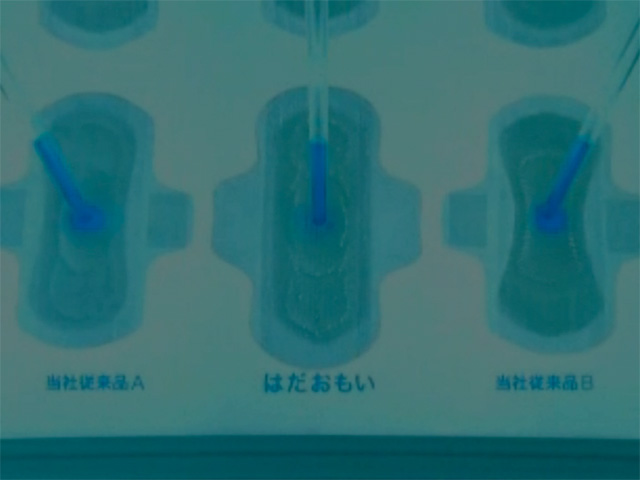
O Holy Mother, in this age when feminine napkins are sold by South Korean transgendered celebrity Harisu, as Your imitators we beseech Thee for humility.
Forgive her envy of menstruation as that which she is "jealous of and wishes to do as a woman," and forgive my envy of sexual reassignment surgery as that which I am jealous of and wish to do as a "man."
Bless me, as You have blessed her, in granting faithful imitation and homage to Thine sacred womb, to give birth to my gender opposite.
Bless me with Thine beauty and grace.
Bless me with the heavenly riches necessary to complete such a transformation.
May the financial success of this audio project serve as the sacred seed of my own menstruation, an idillic flow like that seen in tampon commercials, a holy blue flow reflecting the plasticity of gender transitioning, draping my legs like Your blessed blue robe, that I may follow in Thine image.
O Lady of Gender Transitioning, pray for this sinner now and at the hour of my death, and receive me in my resurrection.
This I humbly pray in Your name. Amen.
HYMN
[SUNG TO MEDICAL FOOTAGE OF VAGINOPLASTY OPERATION]
On that resurrection morning
When all dead in Christ shall rise
I'll have a new body (Praise the Lord)
I'll have a new life
Won't it be so bright and fair
When we meet our loved ones there
I'll have a new body (Praise the Lord)
I'll have a new life
I'll have a new home of love eternal
Where the redeemed of God will stand
There'll be no more sorrow (No more pain)
There'll be no more strife
Raised in the likeness of my savior
Ready to live in paradise
I'll have a new body (Praise the Lord)
I'll have a new life
When ol' Gabriel blows his trumpet
And we walk the streets of gold
I'll have a new body (Praise the Lord)
I'll have a new life
No more pain, worry, sorrow
In this wicked world of sin
I'll have a new body (Praise the Lord)
I'll have a new life
I'll have a new home of love eternal
Where the redeemed of God will stand
There'll be no more sorrow (No more pain)
There'll be no more strife
Raised in the likeness of my savior
Ready to live in paradise
I'll have a new body (Praise the Lord)
I'll have a new life
Oh dear brother are you livin'
For that day when Christ shall come
I'll have a new body (Praise the Lord)
I'll have a new life
Graves all burstin'
Saints a' shoutin'
Heavenly beauty all around
I'll have a new body (Praise the Lord)
I'll have a new life
|
top |
synopsis |
format |
contents |
production schedule |
genres |
packaging |
pricing |
guinness book |
record labels

|
Traffic With The Devil
Listen to excerpt. 00:02'00 1.9MB 128kB/s MP3
SUMMARY
As the stress of living illegally compounds, Filipina(o) overstays in Japan experience an increase in apartment hauntings and terrifying apparitions. Do the ghostly visitations provide psychological release, or additional trauma? While recording interviews in the Philippines, unexpected circumstances introduce a new series of social and anthropological power dynamics that complicate the project beyond resolution. A continuation of "Anthropological Interventionism" from the album Lovebomb/愛の爆弾
VIDEO TRANSCRIPT:
Part II
TRAFFIC WITH THE DEVIL
The Japanese Ministry of Justice's crackdown on Philippine immigrants who overstayed their visas unwittingly triggers a different influx of unwelcome visitors: ghosts. As the pressure of living undocumented compounds, Filipina(o) overstays experience an increase in apartment hauntings, the spirits cohabitating their homes mirroring their own ghostly presence in Japanese society at large.
This new entry procedure will be put into effect prior to November 2007.
Foreigners entering Japan will be required to be fingerprinted and photographed during their entry procedures.
- Accurate identification of foreign terrorists.
- Prevention of terrorism in advance.
- Measures against foreign criminals and illegal immigrants in Japan.
If you refuse to be fingerprinted or photographed you will be denied entry into Japan and ordered to leave.
When considering why most Filipina(o) overstays claim to experience hauntings at home, a belief in ghosts is irrelevant to the question of what function such stories serve within the community.
In psychological terms, given the stress of living as "ghosts" in public to avoid capture, and how the home is a rare place overstays may "re-materialize," one could see the hauntings as projections resulting from exorcisms of the "self-as-ghost."
The fantastic tales of home hauntings invert relations outside the home, and in this sense express material life conditions - specifically the tensions, fears and helplessness of living undocumented - as filtered through cultural legends and religion.
No Filipina(o) is ever more than three degrees of separation from a ghostly encounter. If they have not seen ghosts themselves, they know someone who has (usually a family member), or someone who knows someone who has. The "truth" of these visions is adamantly defended, although I find most people are skeptical once they feel it is safe to confess skepticism. Thus belief is a cultural burden and, as in most cultures, generally dismissed as harmless - since publicly challenging such "harmless" beliefs is, ironically, often harmful.
Even if one wished to portray stories of hauntings positively, such as suggesting they protect people by "keeping them on guard," such fear-based experiences actually increase paranoia, insecurity and trauma - reducing clarity and increasing the likelihood of mistakes leading to capture.
BEING CAPTURED: It is best to be captured by Japanese immigration officials who will take you directly to a deportation holding facility, rather than by local police who may detain you in a temporary holding cell for over a month before releasing you to immigration officials. Detention can last from 1 week to several months depending on documentation, cooperation with authorities, and the ability to buy your own ticket home. Capture entails a 5 year ban on re-entry into Japan. (It is assumed future visa applications will be denied. The only known exceptions involve marriage visas.)
SURRENDERING: Overstays who turn themselves in to an Immigration Bureau are not detained, but must leave Japan within 2 weeks. Surrendering entails a 1 year ban on re-entry into Japan. (It is assumed future visa applications will be denied. The only known exceptions involve marriage visas.)
MANANANGGAL: a vampire of Visayan folklore who appears as a normal person by day, but at night spreads large bat wings, separates its torso from its legs, and flies off to feed on the hearts of fetuses. The legs remain standing in place, to be rejoined before daybreak. Pouring salt or rubbing garlic into the standing legs keeps the torso from rejoining with them, causing death at sunrise.
Many foreigners working in Japan are demonized as blood suckers who only come here to steal Japan's wealth and fly back home. Foreigners are criticized for not being serious about living in Japan, yet from the start most are denied immigration paths allowing us to take root here, forcing us to leave legs standing in our homelands. For example, my only option for obtaining long-term residency was (and still is) as a "heterosexual spouse" - a bitter pill considering my active criticism of institutions of marriage, sexuality and gender. As of April 2009, Latin Americans of Japanese descent with "Nikkei" work visas are actually asked to leave early. With unemployment at 4.4%, Japan began offering ¥300,000 (€2,400) in airfare to anyone who permanently forfeits their Nikkei status, never to return since most could never afford tourist visas. The policy is doubly shameful considering most Nikkei descend from Japanese who were similarly shipped abroad in the early 1900's to lower Japan's domestic population and social burdens. Meanwhile, mandatory fingerprinting at airports is said to catch terrorists and professional criminals, when in fact it is almost exclusively targeting illegal re-entries seeking employment.
FIELDS OF ILLEGAL EMPLOYMENT: Construction (men), hostessing (women & transgendered), cleaning, factory, restaurant, entertainment, sex work, miscellaneous servitude.
HOW TO OVERSTAY: Obtain visa (tourist, etc.) and overstay granted period of stay. Photo and fingerprints will be documented.
HOW TO ENTER UNDOCUMENTED: Be smuggled inside ship container. Beware suffocation, starvation and extreme temperatures. Longer detention if captured.
PROTECTION AGAINST DEPORTATION: To avoid leaving legs standing in homeland when coming to Japan, pour salt over footsteps between home and port of departure.
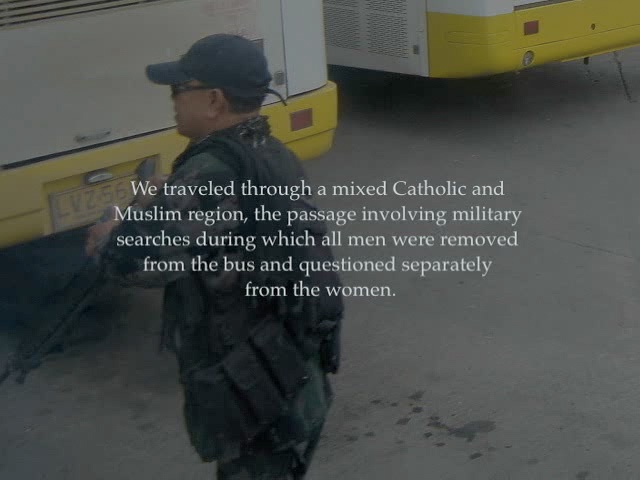
In January 2008, while visiting the Southern Philippine island of Mindanao, two friends brought me to a rural town several hours outside of Davao City that is well known for helping overstays and undocumented workers enter Japan. One friend was a town local from an influential family, the other was from Davao - both were Japanese deportees. I shared my interpretation of the hauntings with the Davao friend, a lone agnostic. We traveled through a mixed Catholic and Muslim region, the passage involving military searches during which all men were removed from the bus and questioned separately from the women. We were to stay at the local friend's house and, if time allowed, meet with one or two other deportees from Japan to discuss and possibly record their stories of life as overstays, including hauntings.
To my surprise, upon arriving we were escorted to the town hall where I was greeted by a top official (a former overstay herself and a key connection for Japanese visas), and then led to a room of onlookers, 8 of which waited to be interviewed. Suddenly forced to play a "documentarian," I began recording people as they described their lives as illegal workers in Japan in oddly stress-free terms, contradicting stories told off camera - and particularly disavowing hauntings. One reason for their on-camera behavior became clear during a break when, to my horror, a man pulled me aside and asked, "So, how exactly will you get us visas?" Unknown to myself, the local friend had told the community that their interviews could help them return to Japan. Believing their comments would be used to petition the Japanese government, they only wished to speak positively on record about the country. The anticipated casual discussion between a few friends-of-friends turned out to be an anthropological nightmare, as I found myself placed in the middle of local politics, family influences, and public desperation. At a loss, I apologized to the man for any misunderstanding. Fearful of the consequences of honesty, and with no way to leave town until morning, I quickly wrapped up the remaining interviews without addressing the misunderstanding publicly.
EDITORIAL REASONS FOR NOT INCLUDING NAMES OF PEOPLE & TOWN, NOR FACES
1) Protect interviewees from further blacklisting. Refuse to record what Japanese borders insist upon cataloguing.
(Some interviewees felt concealing their faces promoted a negative image of "having something to hide.")
2) Avoid negative associations with a specific town name that could adversely affect legitimate visa applications by its residents.
(The town official took it as a matter of pride for her and the town to be named, displaying fearlessness to constituents seeking assistance with entry into Japan.)
3) Protect local contact from embarrassment or trouble.
(It is still unclear if she acted out of misguided good intentions to impress out-of-town visitors, was pranking the community out of boredom, or if it was all a misunderstanding.)
4) Protect myself from unknown repercussions resulting from presumed alliances with, or criticisms of, the region and its members.
(Friend from Davao concurs.)
INTERVIEW EXCERPTS [Audio only]
Man (English): "Every day, work, house, work, house..."
Man (Japanese): "For example, when people are sent back they can never return, so that creates a lot of stress."
Woman (English): "Oh my God, for example, if you have a neighbor Nihonjin (Japanese) and then if you're noisy living in that place, then they will call the police that somebody lives there. That's why I have to transfer house, then have to transfer again, it's so hard to transfer from one place to another."
Man (Japanese): "The first time I was held at immigration for a week, then came back. Second time was police. The Law is totally different. If you are caught by police you are arrested, so detention runs longer. Two and a half months, then to immigration for two weeks, all together three months."
Woman (Bisayan): [Tells a story of when she first came to Japan and could not yet speak Japanese. Her Japanese co-workers blamed her for dirtying the bathroom because they thought she was from the jungle and had never used a toilet before. When they yelled at her in Japanese, she yelled back in Bisayan.]
Woman (English): "At that time there is a lot of work, 1992. You can transfer, in one week you can find job, any job you want. But the second time it's very hard to find a job, really."
Man (Japanese): "Now all my friends are getting caught, so it's more and more difficult to get introduced to employers."
Woman (English): "At that time it's not so stressful because, unlike the present, even the police, it's very hard. At that time even if you met policeman, okay. But now, different."
Woman (English): "Yeah, I was arrested."
Woman (English): "Well, of course, trying to blend in. Like, trying to be... to blend in with the crowd, so not to stand out so, you know, authorities might crack me down."
Man (Japanese): "The first time I was captured by immigration. The second time by police."
Woman (English): "No, it's in immigration. I surrender and then they let me be fingerprint."
Man (English): "I think it's true [that we are like manananggal], because we are Filipinos we have to come back."
Man (Japanese): "The first time I was caught by police. Detention lasted a week. The second time, for a month."
Woman (English): "The food. You can eat anything you want. You can eat apple, you can eat grapes, whereas here in the Philippines only rich people can eat apple every day, grapes every day. But in Japan any time you can eat, as long as you have job."
Woman (English): "A lot of people turned out to be interviewed today because they thought that you would be able to help them go back to Japan, and a daughter of a well known family here, that's what she said to the people."
Woman (English): "I happen to observe there is a ghost in our house."
Woman (Bisayan): "If the number of overstay workers is reduced, do you think that will affect the Japanese economy?"
Man (English): "I think so."
Woman (English): "I find it curious that the men said that they never had experience with any sort of ghost, but I had from first-hand experience that they always talk about those stuffs when I was still in Japan. They've been staying in Japan for fifteen years or more, and I feel they don't want to portray themselves as living stressfully during their stay in Japan."
Woman (English): "Well, this might sound strange, but I found the freedom, like, for... maybe the Philippines is primarily a Catholic country so, this might sound really ironic, but I find as an overstay there I felt free."
Woman (English): "If possible, yes, I would like to go back."
Terre (English): "Do you think that new policy would affect you from coming as a tourist?"
Woman (English): "Yes."
Woman (English): "Yeah, yeah, yes. I only have one year penalty, and then if you were caught, five years. So they told me I'm banned for one year."
Man (Japanese): "I don't think I stand a chance, but... I don't know... I want to come back, I want to return... but there's nothing to be done..."
INTERVIEW QUESTIONS [Reference only - not in video]
- Would you like to speak in Bisayan, Japanese or English?
- How many times have you been to Japan?
- Why did you go to Japan?
- Why did you decide to overstay?
- Was it a difficult decision to make? In what way?
- How long did you stay in Japan?
- What jobs did you do in Japan?
- Were your employers Japanese?
- Was it easy to find work in Japan?
- Were you ever unemployed in Japan?
- Do you have regular and sufficient employment in the Philippines now?
- What's the longest you've overstayed in Japan?
- What was the best part of living in Japan?
- What was the most stressful part of living as an overstay?
- How did you leave Japan (self-surrender or capture)? If captured, how long were you detained?
- Will the new mandatory fingerprinting at Japanese airports keep you from entering Japan again?
- What about after your penalty period is over?
- If the number of overstay workers is reduced, do you think that will affect the Japanese economy or job market?
- Do you believe in ghosts or the supernatural?
- While in Japan, did you ever see a ghost, or did anyone you know claim to see a ghost? If so, where?
- Was it near the beginning or end of your/their stay that the stories started?
- As an overstay, did you ever feel invisible or like a "ghost" in Japanese society?
- Do you think the stress of living like a "ghost" could make a person more likely to see or imagine ghosts?
- If so, do you think the stress from the Japanese crackdown on illegal immigrants may actually be increasing the number of hauntings in Japan?
- Do you think the metaphor of the manananggal is appropriate, inappropriate, or...?
|
top |
synopsis |
format |
contents |
production schedule |
genres |
packaging |
pricing |
guinness book |
record labels
|